Internal Cheats
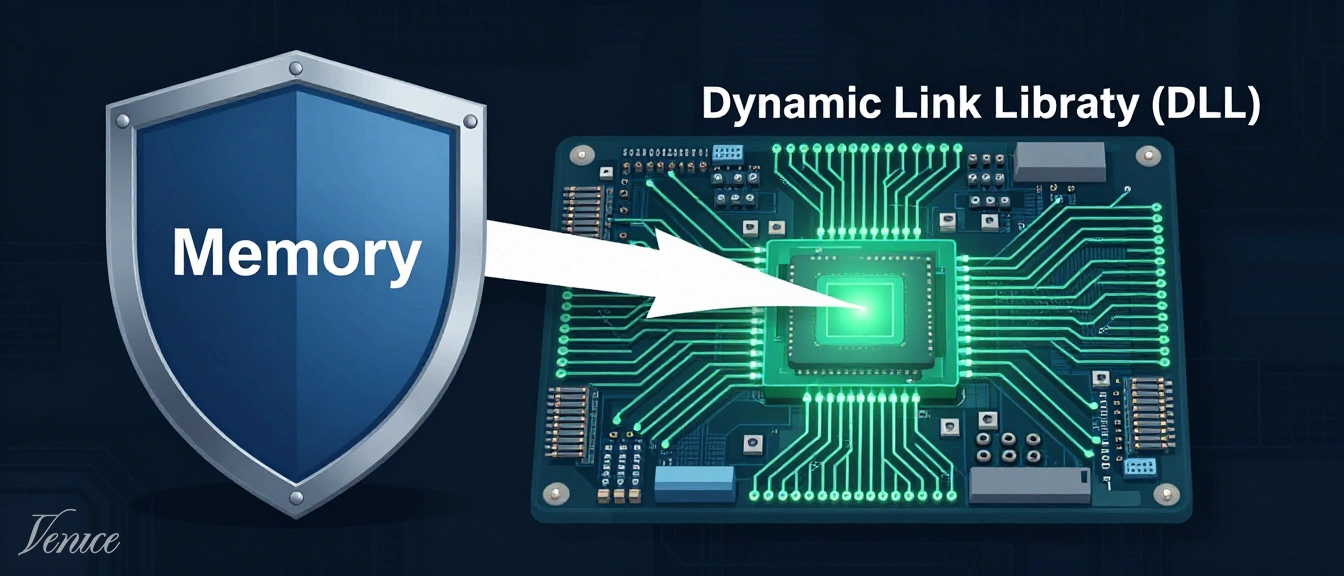
Internal Cheats with DLL Injection: Memory and Function Control Internal cheats based on DLL injection are methods that provide the most comprehensive control by directly integrating into the game process. This technique is built upon infiltrating the game's memory space through dynamic link libraries (DLL) and seizing all game mechanics.
The core logic of internal cheats is to operate within the game's address space to directly access data structures and functions. The injected DLL gains the authority to read and write to the game's memory. This allows for modifications to values such as player health, ammo count, or money. These values are generally not kept in static addresses; they are reached by following pointer chains (e.g., ["game.dll"+0x0ABCDEF] -> [offset+0x50] -> [offset+0x20]). Since every game update changes these addresses, pointers must be constantly updated. The most powerful internal cheat technique is the function hijacking method called "hooking." Critical game functions, such as routines for aiming (AimAssist) or rendering (EndScene), are redirected to custom codes within the DLL. Detour Hooking takes over control by adding jump commands to the beginning of a function. VMT (Virtual Method Table) Hooking, on the other hand, allows manipulating rendering processes in every frame by changing the virtual function tables of objects in C++ games. Aimbot development is the most concrete application of this control. The player's ViewAngles are read from memory and directly translated to the opponent's head through mathematical calculations. For humanoid movements, these angles are softened with a "smooth" factor. Simultaneously, the weapon's recoil (PunchAngles) is read in every frame and compensated for by mouse movement, ensuring bullets always hit the same spot. ESP and Wallhack features work by intervening in the game's render loop. DirectX drawing commands are used via the hooked EndScene function. The 3D coordinates of enemies are translated into 2D screen coordinates with the WorldToScreen function, and information such as boxes, names, and health bars are drawn over them. Wallhack makes things behind walls visible by changing the game's depth buffer or shaders. Evasion techniques against modern kernel-level anti-cheat systems (EAC, BattlEye, Vanguard) are of critical importance. Cheats use polymorphic codes to create different memory patterns at each execution and time the access to critical functions to avoid the anti-cheat's scanning loop. In some cases, the cheat attempts to minimize detection by clearing its own traces from the memory. Consequently, while DLL injection-based internal cheats offer immense power by penetrating the most fundamental layers of the game, this power also brings the highest risk.